
AI Agent vs AI Automation: The Ultimate Difference Explained (2026)
🚀 Quick Summary: AI Agent vs AI Automation is one of the hottest debates in the tech world right now. Both sound similar, but they work very differently. In this blog, we break down every distinction – with real examples, pros, cons, use cases, tips, and FAQs – so you know exactly which technology your business actually needs.
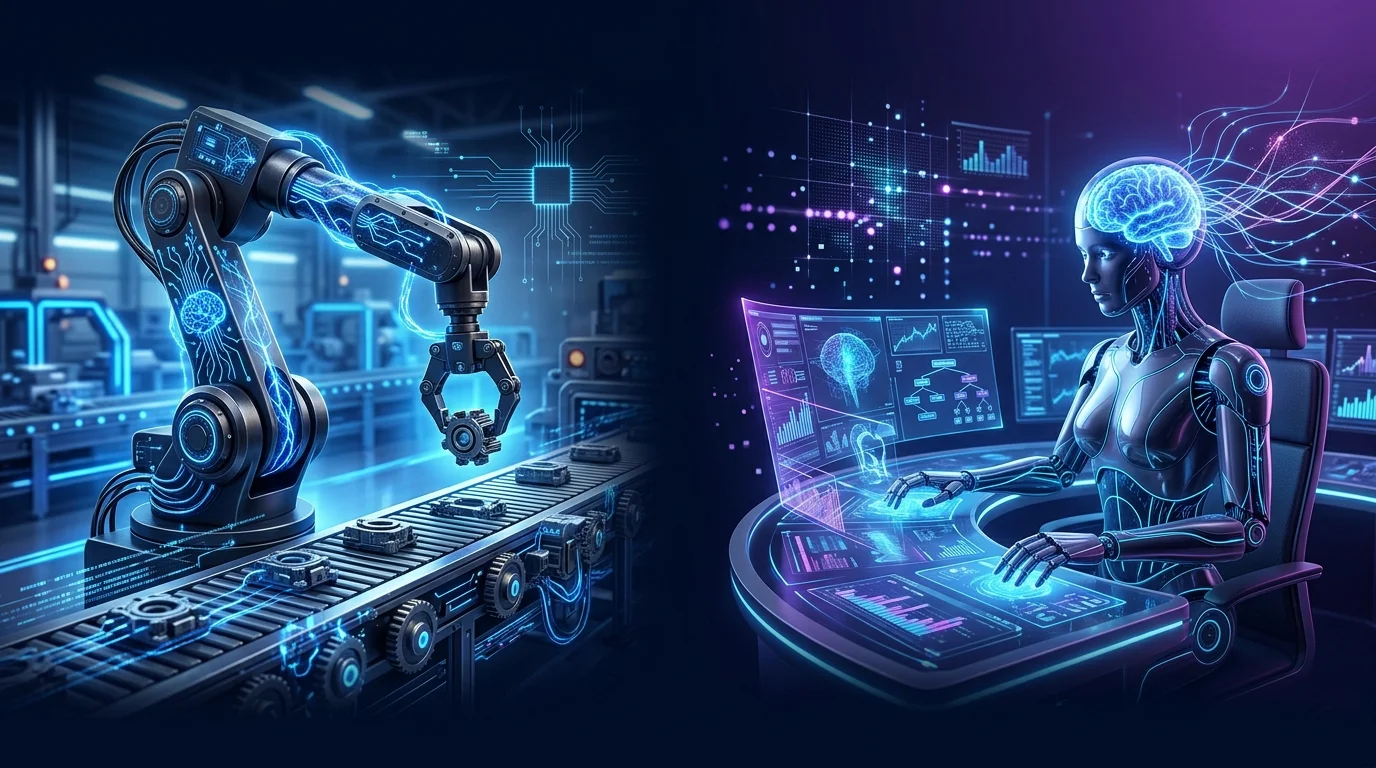
Introduction: Why the Confusion Between AI Agent vs AI Automation?
If you have been following the AI revolution in 2025, you’ve probably noticed two terms popping up everywhere – AI agents and AI automation. Businesses, developers, and marketers are using them interchangeably. But here’s the truth: AI Agent vs AI Automation is not just a naming difference – it is a fundamental difference in how these systems think, act, and deliver value.
Understanding the difference between AI Agent and AI Automation can save your business from making expensive mistakes. You might be investing in automation when you actually need an agent, or vice versa. This guide will change how you see both technologies – forever.
Let’s start from the very basics.
What is AI Automation?
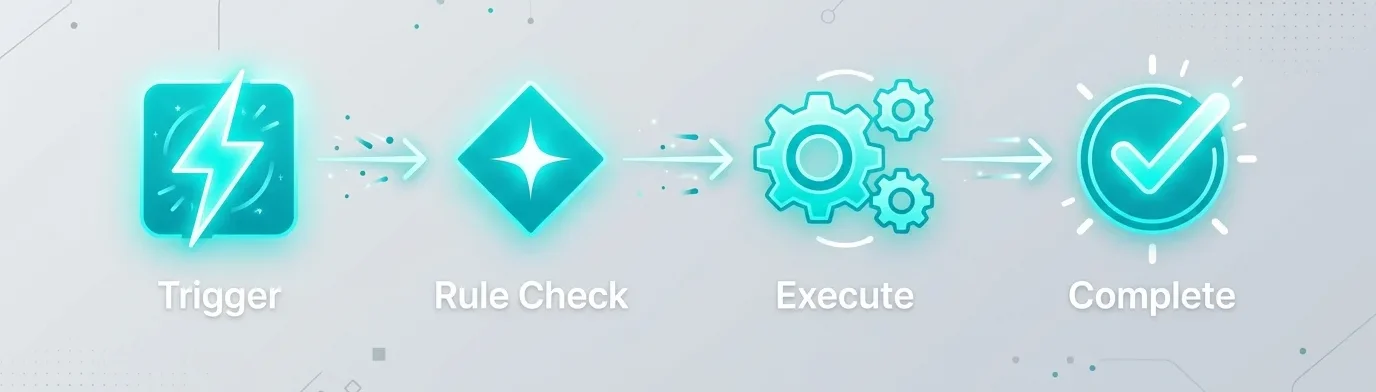
AI automation refers to using artificial intelligence to perform repetitive, rule-based tasks without constant human intervention. Think of it as a smart conveyor belt – it follows a pre-set path, handles volume efficiently, and does exactly what you programmed it to do.
AI automation has been around for years. It powers:
- Email auto-responders
- Invoice processing systems
- Chatbots that follow decision trees
- Scheduled social media posting
- Data entry and extraction workflows
The core principle of AI automation is “if this, then that.” When a trigger occurs, a predefined action follows. There’s no creativity. No adaptation. Just reliable, scalable execution.
Popular AI Automation Tools:
- Zapier — workflow automation between apps
- Make (formerly Integromat) — visual automation builder
- UiPath — Robotic Process Automation (RPA) powered by AI
🔗 Learn more about automation fundamentals at MIT Technology Review’s AI section.
What is an AI Agent?
An AI agent is a fundamentally different beast. Unlike automation, an AI agent can reason, plan, make decisions, and take actions autonomously – even in situations it hasn’t been explicitly programmed for.
AI agents are built on top of large language models (LLMs) like GPT-4, Claude, or Gemini. They can:
- Break down a complex goal into smaller tasks
- Use tools like web search, code execution, or APIs
- Learn from feedback during a session
- Adapt their behavior based on new information
- Work continuously until a goal is achieved
Think of an AI agent as a digital employee – not just a script. You give it a goal, and it figures out the “how.”
Examples of AI Agents in action:
- An agent that researches competitors, writes a report, and emails it – all on its own
- A coding agent that reads your error, searches Stack Overflow, fixes the bug, and tests it
- A customer support agent that understands nuanced complaints and resolves them dynamically
🔗 Explore how AI agents are being built at LangChain’s documentation.
AI Agent vs AI Automation: Side-by-Side Comparison
| Feature | AI Automation | AI Agent |
|---|---|---|
| Decision Making | Rule-based, predefined | Dynamic, goal-driven |
| Flexibility | Low — follows fixed scripts | High — adapts in real-time |
| Learning | Static (no in-session learning) | Contextual learning within session |
| Task Type | Repetitive, structured tasks | Complex, unstructured goals |
| Human Intervention | Minimal, but pre-setup heavy | Minimal once goal is set |
| Tools Used | Fixed integrations | Dynamically selects tools |
| Error Handling | Breaks on unexpected input | Retries, adapts, or escalates |
| Examples | Zapier, UiPath, Make | AutoGPT, CrewAI, Claude Agents |
| Best For | Volume tasks, workflows | Strategic tasks, research, coding |
| Cost | Lower upfront | Higher (LLM API costs) |
| Setup Complexity | Moderate | Higher — needs prompt engineering |
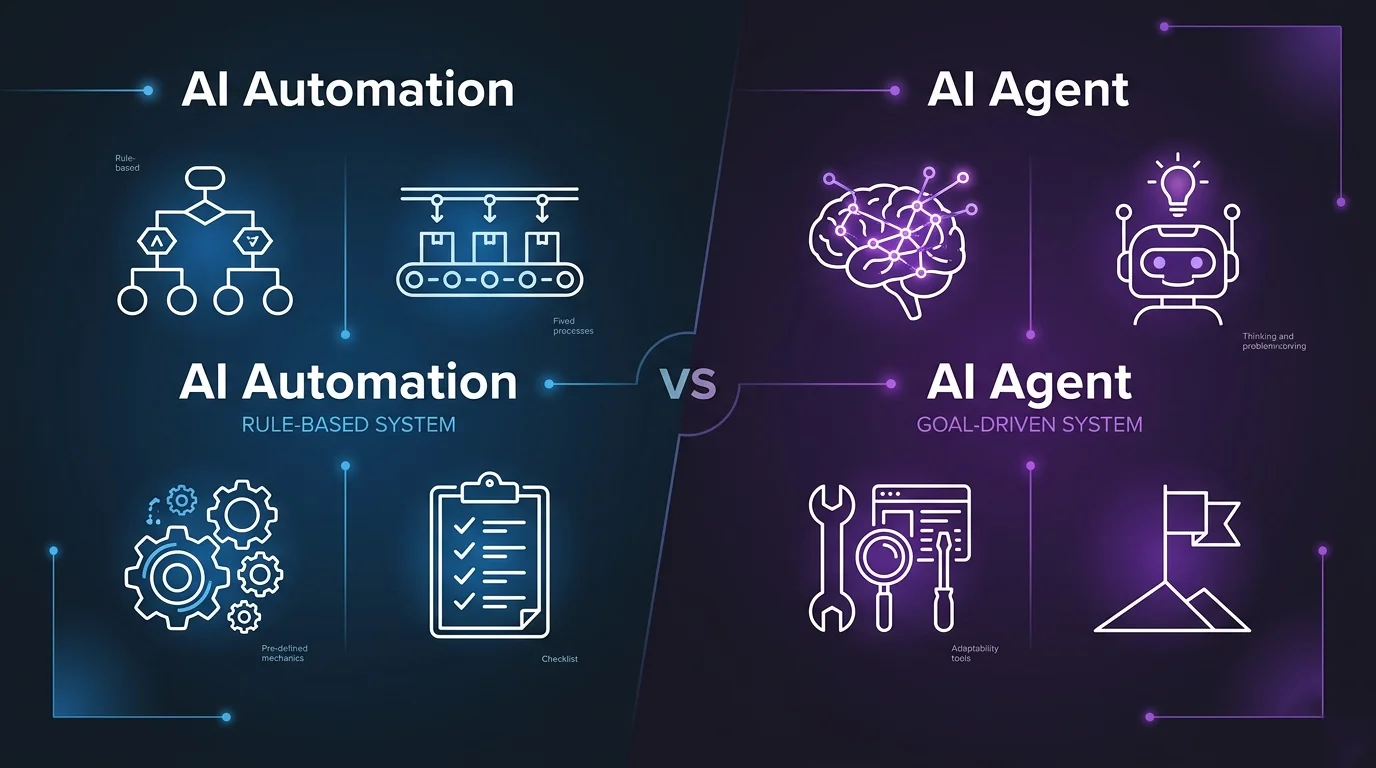
Key Differences Explained: AI Agent vs AI Automation
1. 🧠 Intelligence Level
AI automation is intelligent in a narrow sense. It applies machine learning or NLP within a predefined boundary. For example, an email classifier can identify spam – but it can’t decide what to do with the spam beyond what it was trained for.
AI agents, however, demonstrate general-purpose intelligence. They reason like a human assistant. Given a goal like “increase our blog traffic by 20% this month,” an AI agent can devise a strategy, research keywords, write content drafts, schedule posts, and report results – all independently.
This is the heart of AI Agent vs AI Automation – one executes, the other thinks.
2. 🔄 Adaptability & Context Awareness
AI automation systems fail gracefully but not intelligently. If an input is outside the expected format, the workflow breaks. A human has to step in.
AI agents handle ambiguity. They understand context, ask clarifying questions, or make reasonable assumptions to keep moving. This makes them suitable for customer-facing interactions, research tasks, and anything where uncertainty is inevitable.
3. 🛠️ Tool Usage
AI automation uses fixed integrations – a Zapier workflow connects Gmail to Slack, period. You can’t add a Wikipedia lookup step without rebuilding the workflow.
AI agents dynamically select tools based on what they need. A single AI agent might use a calculator, then a web browser, then a Python interpreter, and then an email API – all in one task, based on what the goal demands.
4. 🎯 Goal-Setting vs Task-Setting
With AI automation, you define every step. You are the architect. The automation just executes your blueprint.
With AI agents, you define only the goal. The agent is the architect. It plans, executes, evaluates, and iterates – all on its own. This is the biggest shift in thinking when moving from automation to agentic AI.
5. 📈 Scalability
Both scale, but differently.
AI automation scales volume – process 10,000 invoices instead of 100. Same task, more instances.
AI agents scale complexity – they handle tasks that grow in scope, not just quantity. You can give an AI agent increasingly complex goals, and it will rise to meet them (within capability limits).
Real-World Use Cases
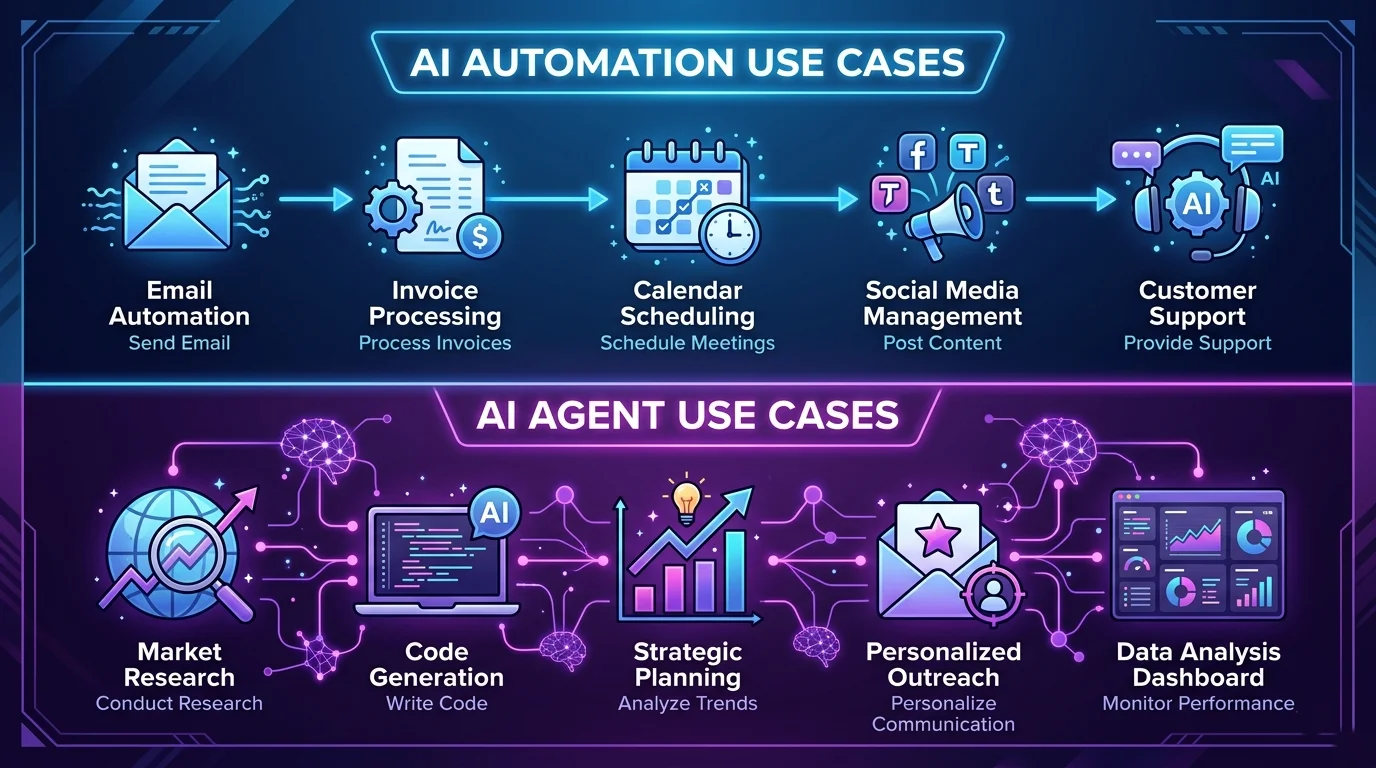
AI Automation Use Cases:
- E-commerce: Auto-send shipping confirmation emails
- HR: Schedule interview reminders and collect feedback forms
- Finance: Extract invoice data and push to accounting software
- Marketing: Post scheduled content across social media platforms
- Support: Route customer tickets to the right department
AI Agent Use Cases:
- Research: “Find the top 10 AI startups funded in 2025 and summarize their business models”
- Development: “Debug this codebase, identify security vulnerabilities, and suggest fixes”
- Marketing Strategy: “Analyse our competitor’s content strategy and draft a counter-campaign”
- Sales: “Find 50 leads in the SaaS industry, enrich their profiles, and draft personalised cold emails”
- Business Intelligence: “Monitor our reviews on G2, Trustpilot, and Capterra daily and alert me to negative trends”
Advantages and Disadvantages
✅ Advantages of AI Automation
- Cost-effective — once set up, it runs with minimal costs
- Highly reliable — deterministic outputs every time
- Easy to audit — you can trace every action
- Fast to deploy — tools like Zapier take minutes to set up
- Scalable for volume — handles thousands of tasks without extra effort
- Low hallucination risk — follows rules, doesn’t invent
- Great for compliance — perfect for regulated industries
❌ Disadvantages of AI Automation
- Brittle — breaks when input format changes
- Limited to pre-defined tasks — can’t handle new scenarios
- High maintenance — every change needs manual re-configuration
- No contextual understanding — misses nuance in human communication
- Not creative — cannot generate new strategies or ideas
✅ Advantages of AI Agents
- Goal-oriented — you set the destination, the agent finds the route
- Adaptable — handles novel situations intelligently
- Multi-tool usage — can combine APIs, browsers, code, and more
- Reduces human workload on complex tasks — true cognitive offloading
- Continuously improving within a session
- Natural language interface — no technical setup needed
- Handles ambiguity — can ask follow-up questions when unclear
❌ Disadvantages of AI Agents
- Higher cost — LLM API calls add up quickly
- Can hallucinate — may take wrong actions confidently
- Harder to audit — decision paths are not always transparent
- Requires guardrails — without supervision, agents can go off-track
- Slower for simple tasks — overkill for basic workflows
- Prompt sensitivity — output quality depends heavily on instructions
Tips & Tricks: Getting the Most Out of Both Technologies
🔧 Tips for AI Automation
- Map your process first — Document every step before automating anything. Automate a broken process and you’ll scale the problem.
- Use error notifications — Always add a failure alert so you know when a workflow breaks silently.
- Start small, expand gradually — Automate one workflow, measure results, then expand.
- Use conditional logic — Build in “if/else” branches to handle edge cases gracefully.
- Regularly audit your automations — APIs change, tools update. Review workflows quarterly.
- Combine with AI tools — Use AI (like NLP) as a step within your automation for smarter outputs.
🤖 Tips for AI Agents
- Write crystal-clear goal prompts — Vague goals produce vague results. Be specific about what “done” looks like.
- Give agents the right tools — Make sure your agent has access to what it needs: search, code execution, file access, etc.
- Set boundaries explicitly — Tell the agent what it should NOT do. Guardrails prevent runaway actions.
- Use multi-agent frameworks — For complex tasks, use frameworks like CrewAI where specialized agents collaborate.
- Always include a human-in-the-loop checkpoint — Especially for high-stakes tasks (sending emails, making purchases).
- Log everything — Track what your agent does for debugging and accountability.
- Iterate on your prompts — Agent performance improves dramatically with prompt refinement.
When to Use AI Automation vs AI Agent: Decision Framework
Ask yourself these questions:
| Question | If YES → Use… |
|---|---|
| Is the task repetitive and predictable? | ✅ AI Automation |
| Does the task involve open-ended goals? | ✅ AI Agent |
| Do you need 100% deterministic output? | ✅ AI Automation |
| Does the task require creativity or reasoning? | ✅ AI Agent |
| Is your budget tight? | ✅ AI Automation |
| Do you need complex, multi-step research? | ✅ AI Agent |
| Are you in a highly regulated industry? | ✅ AI Automation |
| Do you want to automate knowledge work? | ✅ AI Agent |
Pro Tip: The future isn’t choosing one over the other – it is hybrid architectures where AI agents make decisions and trigger automated workflows to execute them.
The Future: Agentic Automation (The Best of Both Worlds)
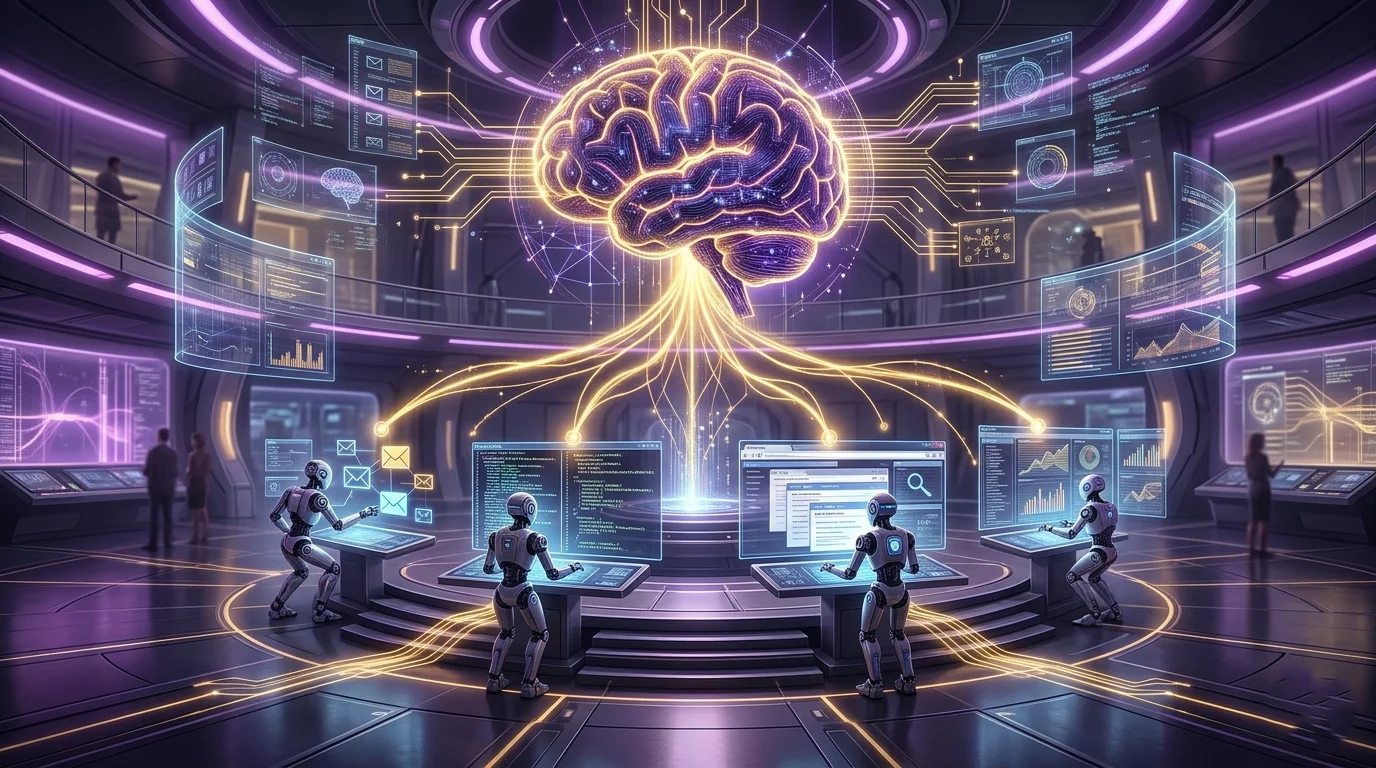
The most exciting development in 2025 is agentic automation – where AI agents orchestrate and control AI automations. Think of it as an AI manager directing an AI workforce.
For example:
- An AI agent analyses incoming customer support tickets (agentic reasoning)
- It classifies them by urgency and type (decision-making)
- It then triggers specific automations for each type (automated execution)
- It monitors outcomes and adjusts routing rules (continuous learning)
Companies like Salesforce, Microsoft, and Google are already building platforms around this paradigm. The businesses that understand AI Agent vs AI Automation today will be the ones who architect these hybrid systems tomorrow.
Frequently Asked Questions (FAQ)
❓ Q1: Is an AI chatbot an AI agent or AI automation?
A: Most traditional chatbots (decision-tree based) are AI automation. They follow scripts. However, modern LLM-powered chatbots like Claude or ChatGPT – especially with plugins or tools enabled – function as AI agents because they can reason, adapt, and take actions.
❓ Q2: Can AI agents replace AI automation entirely?
A: Not entirely. AI agents are powerful but expensive and less reliable for simple, high-volume tasks. For structured, repetitive workflows, AI automation remains more cost-effective and reliable. The smart approach is to use both strategically.
❓ Q3: What is the best AI agent framework available today?
A: Top AI agent frameworks in 2025 include:
- LangChain — most popular for developers
- CrewAI — multi-agent collaboration
- AutoGen (Microsoft) — enterprise-grade agents
- Claude Agents (Anthropic) — highly capable with long context
❓ Q4: Is Zapier an AI agent or AI automation?
A: Zapier is primarily an AI automation platform. However, with its newer AI features (like AI steps in Zaps), it’s beginning to incorporate agentic capabilities. But at its core, it’s automation – rule-based, trigger-action workflows.
❓ Q5: What industries benefit most from AI agents?
A: AI agents deliver the highest ROI in:
- Software development (coding, debugging, testing)
- Marketing (research, content strategy, SEO)
- Finance (analysis, report generation)
- Legal (document review, contract analysis)
- Healthcare (clinical research assistance)
❓ Q6: Is AI Agent vs AI Automation relevant for small businesses?
A: Absolutely. Small businesses should start with AI automation for cost efficiency (email, social posting, CRM updates). As they grow, incorporating AI agents for strategy and research tasks can give them a competitive edge without hiring additional staff.
❓ Q7: What are the risks of AI agents in production?
A: Key risks include:
- Hallucination — agents acting on incorrect information
- Unintended side effects — agents taking unauthorised actions
- Cost overruns — excessive LLM API calls
- Data privacy — agents accessing sensitive data
Always implement human-in-the-loop checkpoints for production deployments.
Conclusion: AI Agent vs AI Automation — Which One Wins?
Neither wins. Both are essential.
AI automation is your reliable, scalable workhorse — perfect for structured, high-volume, repetitive tasks. It saves time, reduces errors, and is easy to audit.
AI agents are your intelligent, adaptive problem-solvers — perfect for complex, open-ended, knowledge-intensive tasks. They think, plan, and act like digital employees.
The real competitive advantage lies in knowing when to use which — and ultimately, how to combine them into a hybrid system where agents orchestrate automations seamlessly.
Understanding AI Agent vs AI Automation isn’t just a technical distinction. It’s a strategic superpower for anyone building AI-first businesses in 2025.
💡 Found this helpful? Share it with your team! And check out our related guides: