
Large Language Model (LLM): The Ultimate Guide to Modern AI Conversations
A Large Language Model (LLM) is the technology behind many AI chatbots and writing tools you see today. If you’ve asked an AI to summarize a document, write an email, generate code, or explain a complex topic, you’ve already used an LLM.
In this blog, you’ll learn which is a Large Language Model (LLM), how it works, what its architecture looks like, the most popular LLMs, real-world use cases, advantages, challenges, FAQs, and even image prompts you can generate using Google Gemini.

Which is a Large Language Model (LLM)?
A Large Language Model (LLM) is a machine-learning model trained on huge amounts of text data so it can understand and generate human-like language. The most common training method is “next-token prediction,” where the model learns to predict the next word (or word-part) in a sentence based on previous words.
A Large Language Model (LLM) can do tasks like:
Writing articles, ads, and emails
Summarizing long content
Translating languages
Answering questions
Generating code and debugging
Extracting information from text
Think of it as a powerful text engine that can follow instructions and produce natural responses.
Why a Large Language Model (LLM) is important today
A Large Language Model (LLM) makes software easier to use because it turns natural language into an interface. Instead of clicking through menus, users can simply ask questions and get results.
This is why LLMs are used in:
Customer support chatbots
SEO and content writing tools
Coding assistants
Research and summarization apps
Business automation systems
Working of a Large Language Model (LLM) (Simple Step-by-Step)
Here’s the working of a Large Language Model (LLM) in an easy way.
1) Input Prompt
You type something like: “Explain LLM in simple words.”
2) Tokenization
The model breaks your text into smaller units called tokens (words or word parts).
3) Embeddings
Each token is converted into numbers (vectors) so the model can process meaning.
4) Transformer Processing
The model passes these vectors through multiple transformer layers. This is where it “understands context.”
5) Predicting Next Token
The model predicts the next token again and again until a full answer is created.
6) Final Output
You get a complete response that sounds human-like.
Architecture of a Large Language Model (LLM)
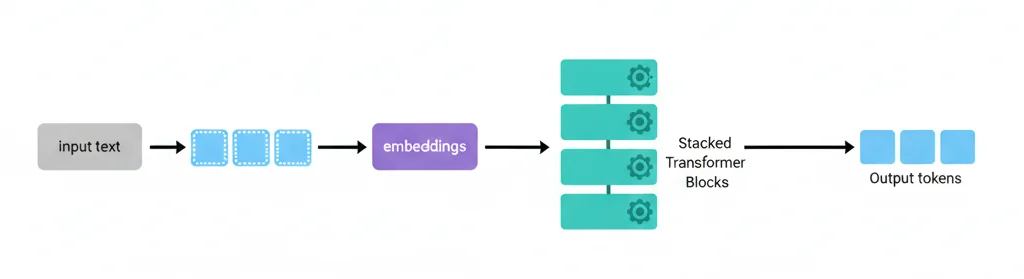
Most modern LLMs use the Transformer architecture. Here are the main parts.
Tokenizer
Splits input text into tokens.
Embedding Layer
Converts tokens into vectors that represent meaning.
Transformer Blocks (Many Layers)
Each transformer block includes:
Self-Attention: Helps the model focus on important words in the prompt
Feed Forward Network: Processes information deeper
Normalization + Residual Connections: Improves training stability
Output Layer
Converts the internal representation back into readable tokens.
Self-Attention

Self-attention means the model decides which words matter most. For example, in the sentence:
“Ravi gave his book to Amit because he was leaving.”
Self-attention helps the model guess who “he” refers to using context. This is one reason why a Large Language Model (LLM) can produce more meaningful text than older NLP systems.
Training Process of a Large Language Model (LLM)
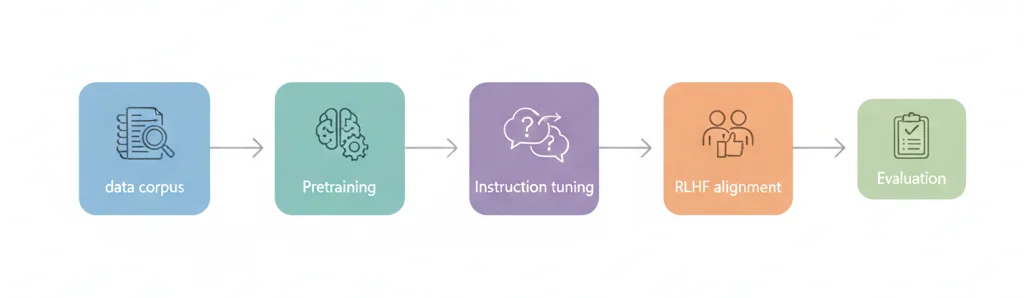
A production-ready Large Language Model (LLM) usually goes through these stages:
1) Pretraining
The model reads massive datasets (books, websites, articles) to learn general language patterns.
2) Instruction Tuning
The model is trained on prompt–response examples so it follows instructions better.
3) Alignment / Preference Training (Example: RLHF)
Humans rank model outputs, and the model learns to generate more helpful and safer responses.
4) Testing and Deployment
Teams test for quality, safety, bias, and performance before releasing.
Examples of a Large Language Model (LLM)
Here are some well-known examples of a Large Language Model (LLM):
Popular LLMs (What they are known for)
Gemini
Strong in multimodal tasks and long-context work (useful for large documents).
Llama
Popular for self-hosting and customization.
Claude
Known for good writing quality and safer outputs.
Mistral
Often chosen for speed and cost efficiency.
DeepSeek
Popular for reasoning, coding, and math-focused workflows.
Use Cases of a Large Language Model (LLM)
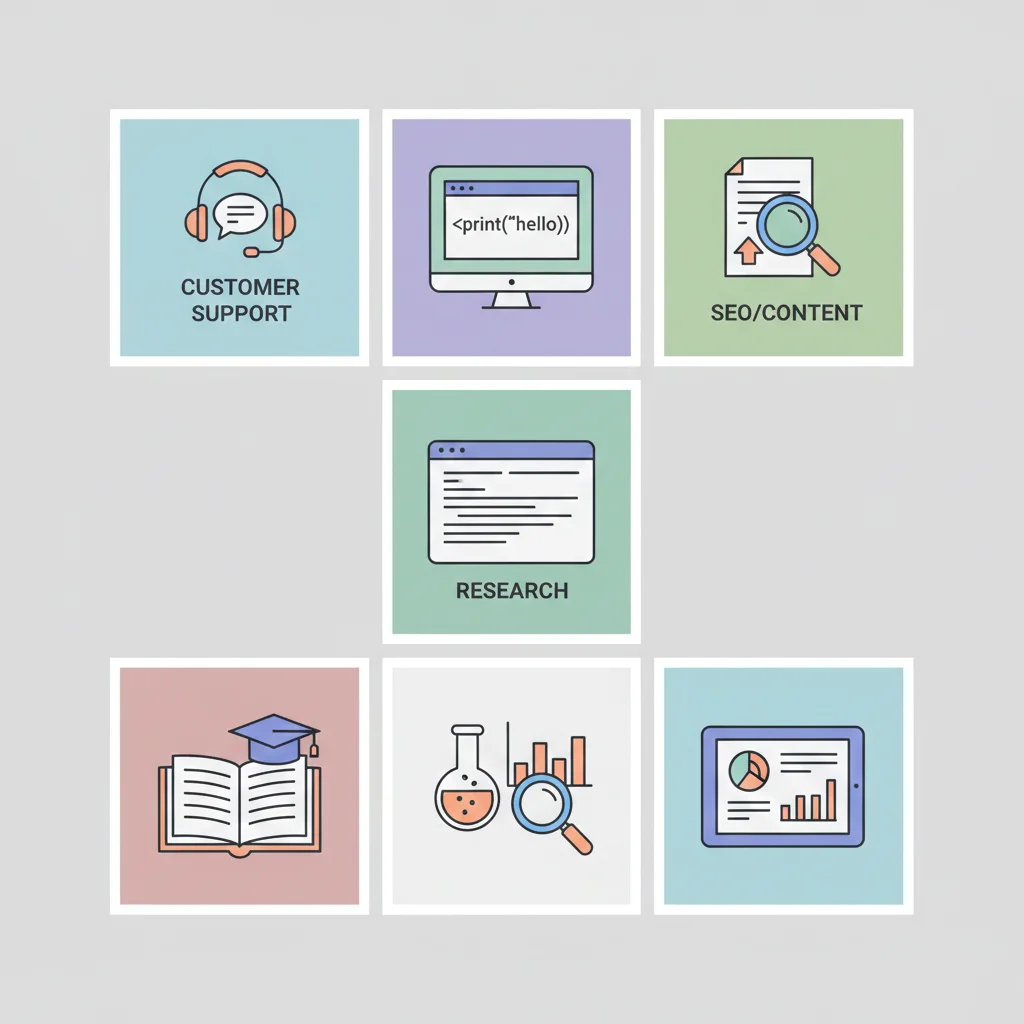
A Large Language Model (LLM) is used in many industries:
1) Customer Support
Auto replies and ticket summaries
Knowledge base Q&A (with RAG)
2) SEO and Blogging
Content outlines and drafts
Meta title and description creation
FAQ generation
3) Coding and Development
Writing code snippets
Debugging and refactoring
Writing documentation
4) Education
Personalized tutoring
Quiz generation
Simplified explanations
5) Business Automation
Report summarization
Meeting notes and action items
Email drafting
6) Research
Summaries of papers
Comparing viewpoints
Extracting key points
Advantages of a Large Language Model (LLM)
Here are the biggest advantages of a Large Language Model (LLM):
Saves time in writing and summarizing
Can handle multiple tasks with one model
Makes tools easier using natural language
Improves productivity for teams
Supports many languages
Challenges of a Large Language Model (LLM)
A Large Language Model (LLM) also has limitations:
Hallucinations
Sometimes it can generate confident but incorrect answers.
Bias
Training data can contain bias, so outputs may reflect that.
Privacy risks
Sensitive data should not be shared with public AI tools.
Cost and speed
Large models can be expensive and slow at scale.
Security issues
Prompt injection attacks can manipulate responses.
How to use a Large Language Model (LLM) safely
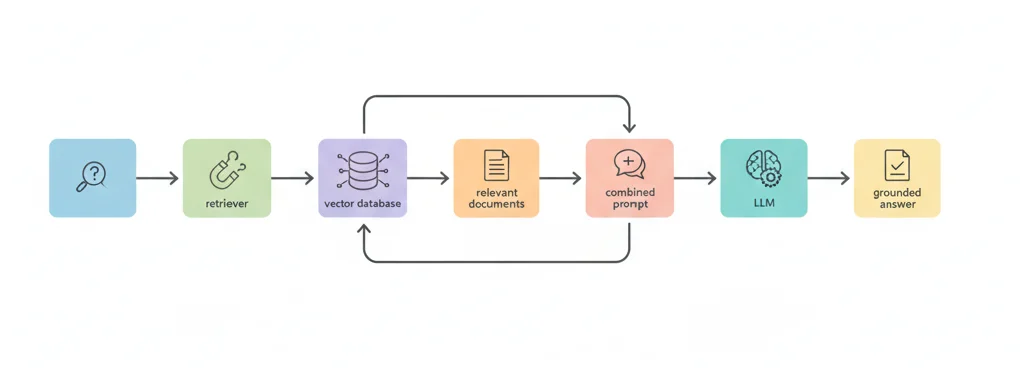
To use an LLM more reliably:
Use clear prompts and format instructions
Add retrieval (RAG) for factual responses
Keep a review process for important content
Evaluate outputs with real test prompts
Don’t share sensitive data unnecessarily
LLM vs Traditional NLP
Traditional NLP tools were often trained for one task only, like sentiment analysis or spam detection. A Large Language Model (LLM) can do many tasks in one system with prompts.
Traditional NLP: fast, cheap, limited tasks
LLM: flexible, powerful, but needs guardrails
FAQs
1) Is ChatGPT a Large Language Model (LLM)?
ChatGPT is an application. It works using a Large Language Model (LLM) behind the scenes.
2) Can a Large Language Model (LLM) browse the internet?
Only if the tool connects it to browsing or retrieval. The base model doesn’t automatically browse.
3) Does a Large Language Model (LLM) always give correct answers?
No. It can hallucinate. Use sources, retrieval, and verification for accuracy.
4) What is the best LLM?
The best depends on your needs: speed, budget, privacy, long context, or writing quality.
5) Can I run an LLM on my own server?
Yes, especially open-weight models like Llama, but hardware and optimization matter.
Important Questions and Answers
Which is a Large Language Model (LLM) best used for?
It’s best for language-heavy tasks: writing, summarizing, extracting, translating, and chat-based assistants.
What should I check before choosing an LLM for my business?
Check accuracy needs, privacy, cost per request, speed, and whether you need grounding with RAG.
How can I reduce hallucinations?
Use RAG, cite sources, restrict output format, and add human review.
Conclusion
A Large Language Model (LLM) is a transformer-based AI system trained on massive text data that can generate human-like language. It is used in SEO, customer support, coding, education, and business automation. While powerful, it also has challenges like hallucinations, privacy concerns, and bias so it should be used with the right strategy and guardrails.
If you want to build smarter content or automation tools, learning how a Large Language Model (LLM) works is one of the best investments you can make.